
Motorola Edge 60 Pro vs Nothing Phone (3a) vs Vivo X Fold6
Compare Motorola Edge 60 Pro, Nothing Phone (3a) and Vivo X Fold6 side by side — see how they stack up on price, camera, battery, performance, display and full specifications, with the winner in each key spec highlighted below.
📱 Compare with suggested mobiles




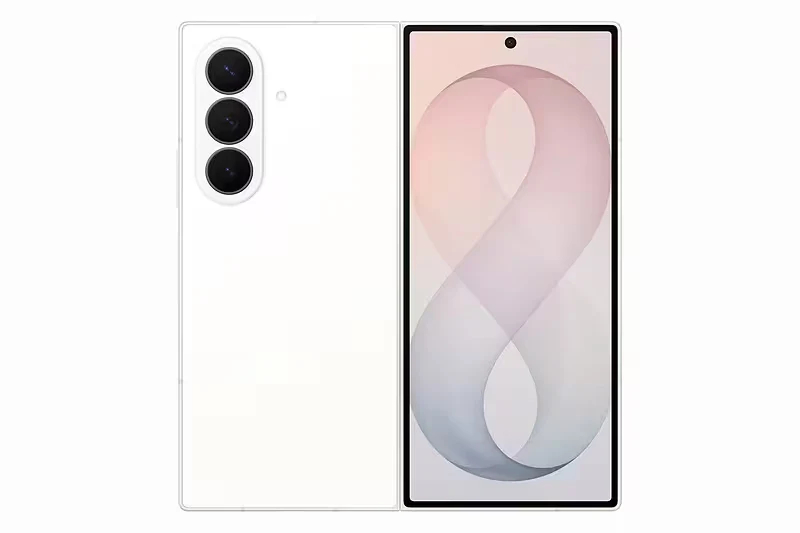
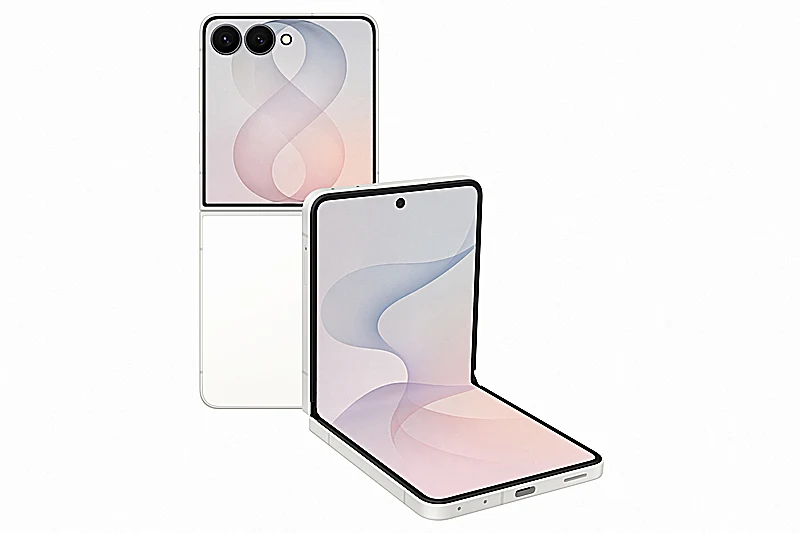

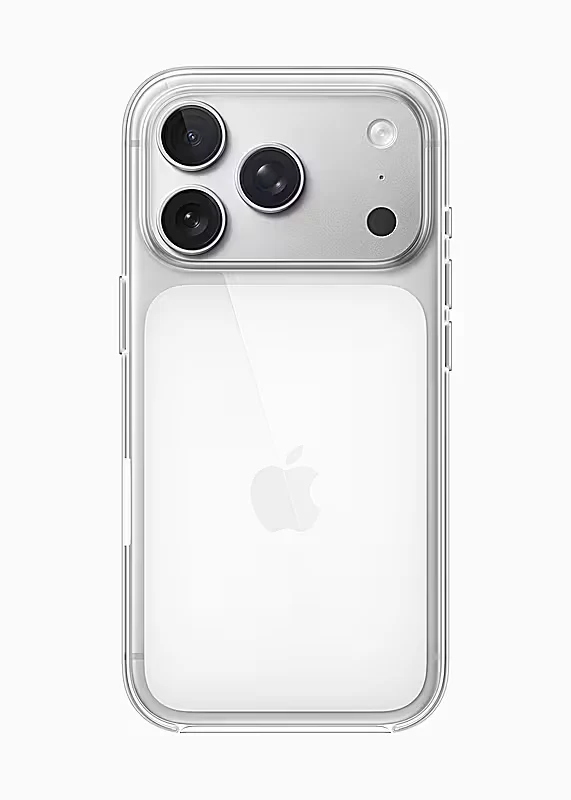
🏆 The Verdict — Category Winners
Quick Specs
×
 Motorola Edge 60 Pro |
×
 Nothing Phone (3a) |
×
Vivo X Fold6 |
|
|---|---|---|---|
| Price & Best Deals |
₹29,999
|
₹24,999
|
—
|
| Display | 6.7″ / 144Hz | 6.77″ / 120Hz | — |
| Max RAM | 12GB / 512GB | 12GB / 256GB | — |
| Main Camera | 50.0 MP | 50.0 MP | — |
| Selfie Camera | 50.0 MP | 16.0 MP | — |
| Pixel Density | 446 ppi | 387 ppi | — |
| Battery | 6000 mAh | 5000 mAh | — |
| Fast Charging | 90W | 50W | — |
| Charging Time (20-100%) | 28 min | 54 min | — |
| Fabrication | 4 nm | 4 nm | — |
| AnTuTu Score | 900,000 | 780,000 | — |
| Battery Life (PCMark) | 13.8 hrs | 12.5 hrs | — |
| Peak Brightness | 1600 nits | 3000 nits | — |
| Spec Score | 79.0/100 | 74.5/100 | 81.1/100 |
| 5G | ✓ Yes | ✓ Yes | ✗ No |
| NFC | ✓ Yes | ✓ Yes | ✗ No |
| Stereo Speakers | ✓ Yes | ✓ Yes | ✗ No |
| Fingerprint | Under Display | Under Display | — |
| SIM | Dual | Dual | — |
| USB | Type-C 2.0 | Type-C 2.0 | — |
✅ Highlighted cells show the better value for that spec (bigger battery, more MP, higher RAM, lower price, lower nm, higher AnTuTu, faster charging).
Expert Review
|
Motorola Edge 60 Pro 79
Spec Score / 100
★ 4.0/5
Overall Rating
Design
4.1/5
Display
4.2/5
Camera
4.0/5
Performance
3.9/5
Battery
4.3/5
Software
3.9/5
|
Nothing Phone (3a) 74.5
Spec Score / 100
★ 3.9/5
Overall Rating
Design
4.4/5
Display
4.0/5
Camera
3.6/5
Performance
3.5/5
Battery
3.9/5
Software
4.0/5
|
Vivo X Fold6 81.1
Spec Score / 100
★ 4.1/5
Overall Rating
Design
4.4/5
Display
3.7/5
Camera
4.7/5
Performance
4.4/5
Battery
3.4/5
Software
3.6/5
|
| Specification |
×
Motorola Edge 60 Pro ₹29,999
|
×
Nothing Phone (3a) ₹24,999
|
×
Vivo X Fold6 |
|---|---|---|---|
| Network | |||
| Technology | GSM / HSPA / LTE / 5G | GSM / HSPA / LTE / 5G | GSM / HSPA / LTE / 5G |
| 2G bands | GSM 850 / 900 / 1800 / 1900 | GSM 850 / 900 / 1800 / 1900 | GSM 850 / 900 / 1800 / 1900 |
| 3G bands | HSDPA 850 / 900 / 1700(AWS) / 1900 / 2100 | HSDPA 800 / 850 / 900 / 1700(AWS) / 1900 / 2100 | HSDPA 800 / 850 / 900 / 1700(AWS) / 1900 / 2100 |
| 4G bands | 1, 2, 3, 4, 5, 7, 8, 11, 12, 13, 17, 18, 19, 20, 25, 26, 28, 32, 34, 38, 39, 40, 41, 42, 43, 66, 71 | 1, 2, 3, 4, 5, 7, 8, 12, 17, 18, 19, 20, 26, 28, 38, 40, 41, 42, 48, 66 | 1, 2, 3, 4, 5, 7, 8, 12, 17, 18, 19, 20, 25, 26, 28, 34, 38, 39, 40, 41, 42, 43, 48, 66 |
| 5G bands | 1, 2, 3, 5, 7, 8, 20, 26, 28, 38, 40, 41, 66, 71, 75, 77, 78 SA/NSA/Sub6 | 1, 2, 3, 5, 7, 8, 12, 20, 28, 38, 40, 41, 48, 66, 77, 78 SA/NSA | 1, 2, 3, 5, 7, 8, 12, 18, 20, 25, 26, 28, 34, 38, 39, 40, 41, 48, 66, 77, 78, 79 SA/NSA |
| Speed | HSPA, LTE, 5G | HSPA, LTE, 5G | HSPA, LTE, 5G |
| Launch | |||
| Announced | 2025, April 24 | 2025, March 04 | 2026, June 26 |
| Status | Available. Released 2025, April 30 | Available. Released 2025, March 11 | Released 2026, July 01 |
| Body | |||
| Design score | |||
| Dimensions | 160.7 x 73.1 x 8.2 mm (6.33 x 2.88 x 0.32 in) | 163.5 x 77.5 x 8.4 mm (6.44 x 3.05 x 0.33 in) | Unfolded: 157.2 x 145.7 x 4.4 mm or 4.8 mm Folded: 157.2 x 74.3 x 9.4 mm or 9.9 mm |
| Weight | 186 g (6.56 oz) | 201 g (7.09 oz) | 228 g or 235 g (8.04 oz) |
| Build | Glass front (Gorilla Glass 7i), plastic frame, silicone polymer (eco leather) back | Glass front (Panda Glass), plastic frame, glass back | Glass front (closed), aluminum frame, glass-fiber reinforced plastic back |
| SIM | Nano-SIM, Nano-SIM + eSIM, Nano-SIM + Nano-SIM | Nano-SIM + Nano-SIM | Nano-SIM + Nano-SIM |
| IP rating | IP68/IP69 dust tight and water resistant (high pressure water jets; immersible up to 1.5m for 30 min) MIL-STD-810H compliant | IP64 dust tight and water resistant (water splashes) 3 LED light strips on the back (notifications, camera fill light, 26 addressable zones) | IP58/IP59 dust protected and water resistant (high pressure water jets; immersible up to 1m for 30 min) |
| Other Details | * does not guarantee ruggedness or use in extreme conditions | - | - |
| Display | |||
| Display score | |||
| Type | P-OLED, 1B colors, 120Hz, 720Hz PWM, HDR10+, 4500 nits peak | AMOLED, 1B colors, 120Hz, 2160Hz PWM, HDR10+, 800 nits (typ), 1300 nits (HBM), 3000 nits (peak) | Foldable LTPO AMOLED, 1B colors, 120Hz, HDR10+, HDR Vivid, Dolby Vision |
| Size | 6.7 inches, 108.4 cm2 (~92.2% screen-to-body ratio) | 6.77 inches, 111.5 cm2 (~88.0% screen-to-body ratio) | 8.02 inches, 206.8 cm2 (~90.3% screen-to-body ratio) |
| Resolution | 1220 x 2712 pixels, 20:9 ratio (~444 ppi density) | 1080 x 2392 pixels (~387 ppi density) | 2312 x 2504 pixels |
| Pixel Density (PPI) | - | - | ~425 ppi density |
| Peak Brightness | - | - | 5000 nits |
| Protection | Corning Gorilla Glass 7i, Mohs level 4 | Panda Glass, Mohs level 5 Ultra HDR image support | - |
| Other Details | - | - | Cover display: LTPO AMOLED, 120Hz, HDR10+, Dolby Vision 6.51 inches, 1120 x 2528 pixels, 20:9 ratio |
| Platform | |||
| Performance score | |||
| OS | Android 15, up to 3 major Android upgrades | Android 15, upgradable to Android 16, Nothing OS 4.0, up to 3 major Android upgrades | Android 16, OriginOS 6 Fold |
| Chipset | Mediatek Dimensity 8350 Extreme (4 nm) | Qualcomm SM7635 Snapdragon 7s Gen 3 (4 nm) | Mediatek Dimensity 9500 Super |
| CPU | Octa-core (1x3.35 GHz Cortex-A715 & 3x3.20 GHz Cortex-A715 & 4x2.20 GHz Cortex-A510) | Octa-core (1x2.5 GHz Cortex-A720 & 3x2.4 GHz Cortex-A720 & 4x1.8 GHz Cortex-A520) | Octa-core (1x4.21 GHz C1-Ultra & 3x3.5 GHz C1-Premium & 4x2.7 GHz C1-Pro) |
| GPU | Mali G615-MC6 | Octa-core (1x2.5 GHz Cortex-A720 & 3x2.4 GHz Cortex-A720 & 4x1.8 GHz Cortex-A520) | Mali-G1 Ultra MC12 |
| Fabrication | - | - | 3 nm |
| Memory | |||
| Card slot | No | No | No |
| Internal | 256GB 8GB RAM, 256GB 12GB RAM, 512GB 12GB RAM, 512GB 16GB RAM | 128GB 8GB RAM, 256GB 8GB RAM, 256GB 12GB RAM | 256GB 12GB RAM, 512GB 12GB RAM, 512GB 16GB RAM, 1TB 16GB RAM |
| Storage Type | UFS 4.0 | UFS 2.2 | UFS 4.1 |
| Main Camera | |||
| Camera score | |||
| Main | 50 MP, f/1.8, 24mm (wide), 1/1.56", 1.0µm, multi-directional PDAF, OIS 10 MP, f2.0, 73mm (telephoto), 1/3.94", 1.0µm, PDAF, 3x optical zoom, OIS 50 MP, f/2.0, 120˚ (ultrawide), 1/2.76", 0.64µm, PDAF | 50 MP, f/1.9, 24mm (wide), 1/1.57", 1.0µm, dual pixel PDAF, OIS 50 MP, f/2.0, 50mm (telephoto), 1/2.74", 0.64µm, PDAF (25cm - ∞), 2x optical zoom 8 MP, f/2.2, 15mm, 120˚ (ultrawide), 1/4.0", 1.12µm | 200 MP, f/1.7, (wide), 1/1.4", PDAF, OIS 50 MP, f/2.6, 70mm (periscope telephoto), 1/1.95", 0.8µm, PDAF, OIS, 3x optical zoom 50 MP, f/2.1, 16mm, 119˚ (ultrawide), 1/2.76", 0.64µm, PDAF |
| Features | Color spectrum sensor, LED flash, HDR, panorama, Pantone Validated Colour and Skin Tones | LED flash, panorama, HDR | Color spectrum sensor, Laser AF, Zeiss optics, Zeiss T* lens coating, Dual-LED flash, panorama |
| Video | 4K@30fps, 1080p@30/60/120/240fps, gyro-EIS, HDR10+ | 4K@30fps, 1080p@30/60/120fps, gyro-EIS, OIS | 8K@30fps, 4K@30/60fps, 1080p@30/60fps, gyro-EIS |
| Selfie Camera | |||
| Camera score | |||
| Single | 50 MP, f/2.0, (wide), 1/2.76", 0.64µm | 32 MP, f/2.2, 22mm (wide), 1/3.44" | 20 MP, f/2.4, 21mm (wide), 1/3.6", 0.7µm Cover camera: 20 MP, f/2.4, 21mm (wide), 1/3.6", 0.7µm |
| Features | HDR | - | HDR |
| Video | 4K@30fps, 1080p@30/120fps | 1080p@30fps | 1080p@30fps |
| Sound | |||
| Loudspeaker | Yes, with stereo speakers (with Dolby Atmos) | Yes, with stereo speakers | Yes, with stereo speakers |
| 3.5mm jack | No | No | No |
| Hi-Res Audio | 24-bit/192kHz Hi-Res audio | - | - |
| Other Details | - | - | 24-bit/192kHz Hi-Res audio |
| Comms | |||
| WLAN | Wi-Fi 802.11 a/b/g/n/ac/6e, tri-band | Wi-Fi 802.11 a/b/g/n/ac/6, dual-band, Wi-Fi Direct | Wi-Fi 802.11 a/b/g/n/ac/6e/7, dual-band or tri-band, Wi-Fi Direct |
| Bluetooth | Yes | 5.4, A2DP, LE | 5.4, A2DP, LE, aptX HD, LHDC 5 |
| Positioning | GPS, GLONASS, GALILEO, BDS, NavIC | GPS, GALILEO, GLONASS, BDS, QZSS | GPS (L1+L5), BDS (B1I+B1c+B2a+B2b), GALILEO (E1+E5a+E5b), QZSS (L1+L5), NavIC (L1+L5), GLONASS |
| NFC | Yes | Yes | Yes |
| Infrared port | - | - | Yes |
| Radio | No | No | No |
| USB | USB Type-C, OTG | USB Type-C 2.0, OTG | USB Type-C 3.2 Gen2, OTG, Display Port |
| Features | |||
| Sensors | Fingerprint (under display, optical), accelerometer, gyro, proximity, compass, Smart Connect support | Fingerprint (under display, optical), accelerometer, gyro, proximity, compass | Fingerprint (side-mounted), accelerometer, gyro, proximity, compass, barometer |
| Battery | |||
| Battery score | |||
| Type | Si/C Li-Ion 6000 mAh | 5000 mAh | Si/C Li-Ion |
| Capacity | - | - | 7000 mAh |
| Charging | 90W wired, PD3.0, 15W wireless, 5W reverse wired | 50W wired, 50% in 19 min, 100% in 56 min | 80W wired 40W wireless Reverse wired 5W reverse wireless |
| Misc | |||
| Colors | Pantone: Shadow, Dazzling Blue , Sparkling Grape | Black, White, Blue, Community Edition green | Gray, White, Azure |
| Models | XT2507-1 | A059 | V2545A |
| SAR EU | 0.90 W/kg (head) 1.39 W/kg (body) | - | - |
| Tests | |||
| Performance | AnTuTu: 1356227 (v10), GeekBench: 4476 (v6), 3DMark: 3221 (Wild Life Extreme) | AnTuTu: 828429 (v10), GeekBench: 3278 (v6), 3DMark: 1064 (Wild Life Extreme) | - |
| Display | 1595 nits max brightness (measured) | 1273 nits max brightness (measured) | - |
| Loudspeaker | -25.1 LUFS (Very good) | -24.1 LUFS (Very good) | - |
| Bootup Time | Active use score 16:12h | Active use score 13:40h | - |
| EU Label | |||
| Energy | Class A | Class C | - |
| Battery | 67:47h endurance, 1000 cycles | 43:56h endurance, 1400 cycles | - |
| Free fall | Class A (270 falls) | Class C (90 falls) | - |
| Repairability | Class B | Class C | - |
Frequently Asked Questions
Vivo X Fold6 scores highest overall in this comparison, with a spec score of 81.1/100. The spec score weighs performance, display, camera, battery and value together, so treat it as a starting point rather than a verdict — the right phone still depends on which of those you care about most.
Nothing Phone (3a) is the most affordable here, starting at ₹24,999. That is ₹5,000 less than the most expensive phone in this comparison.
Motorola Edge 60 Pro has the largest battery at 6000 mAh. It charges at up to 90W. Capacity is only part of endurance: chipset efficiency and screen refresh rate affect how long a charge actually lasts.
Motorola Edge 60 Pro is the fastest on paper, topping the AnTuTu benchmark at 900,000. Benchmarks measure short bursts, so a phone with better sustained thermals can still feel quicker in long gaming sessions.
Nothing Phone (3a) has the brightest display at 3000 nits peak, with a 120Hz refresh rate. Brightness matters most for outdoor readability; see the Display section below for panel type and resolution.